
Peptides
Kisspeptin in plain English: the master switch of reproductive signaling
Kisspeptin doesn't add hormones — it flips the switch that tells your brain to release them. Here's how the HPG axis works, in plain terms.
8 min read
The one-sentence version
Your reproductive hormones don't start in your ovaries or testes — they start in your brain. Kisspeptin is the peptide that flips the first switch: it tells the hypothalamus to release GnRH, which tells the pituitary to release LH and FSH, which tell the gonads to make testosterone, estrogen, and support fertility.
Think of it like a relay race. Most hormone therapies hand you the baton somewhere in the middle of the race. Kisspeptin starts the race itself — at the very first runner.
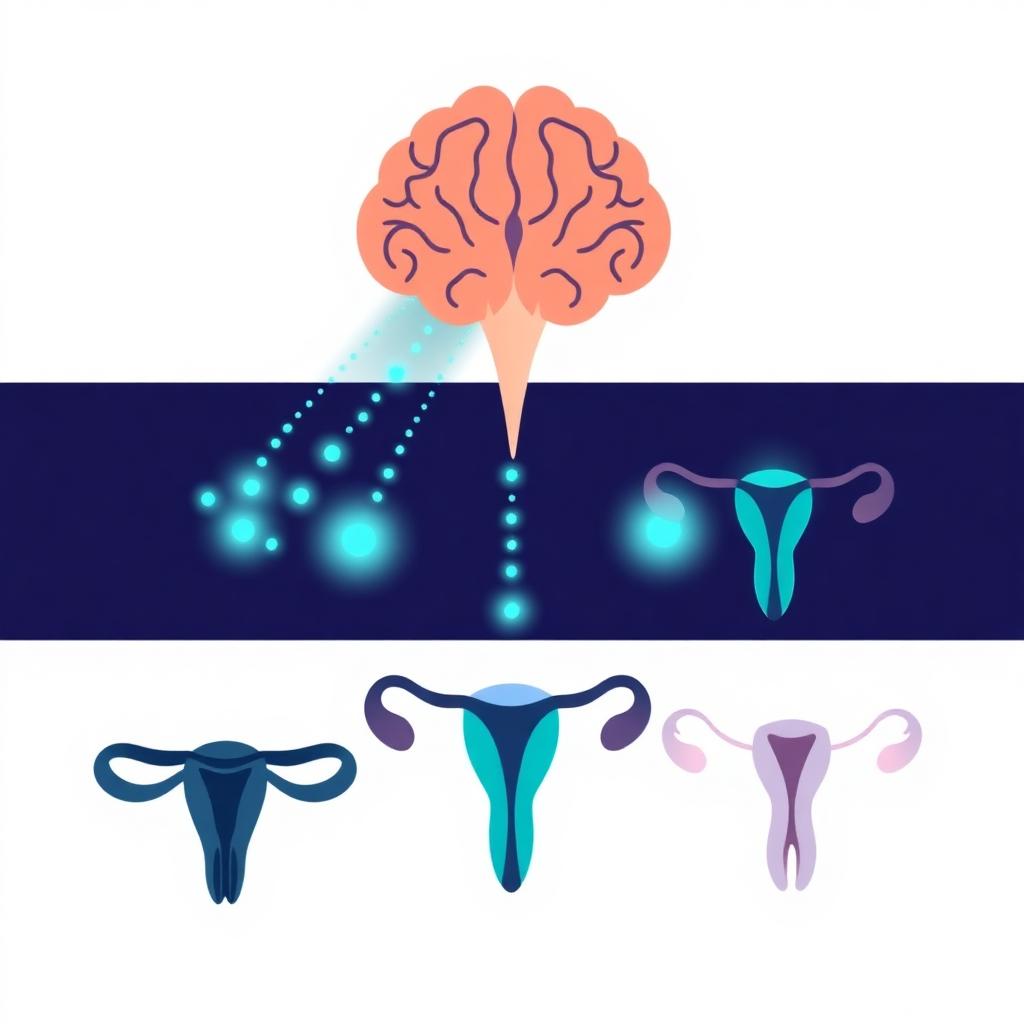
The domino chain, step by step
Step 1 — Kisspeptin neurons in the hypothalamus fire and stimulate GnRH neurons. This is the natural 'on' signal for the entire reproductive hormone system (called the HPG axis).
Step 2 — GnRH travels a short distance to the pituitary gland and triggers the release of two gonadotropins: LH (luteinizing hormone) and FSH (follicle-stimulating hormone).
Step 3 — LH and FSH reach the testes or ovaries. In men, LH stimulates testosterone production; in women, LH and FSH drive ovulation, estrogen, and progesterone.
Because kisspeptin works at the top of this chain, it stimulates your own body's hormone production rather than replacing it from the outside — the same 'signal, don't substitute' philosophy as tesamorelin for growth hormone.
What the human research actually shows
Kisspeptin has an unusually strong human evidence base for a peptide. In controlled human studies, kisspeptin administration reliably and potently stimulates LH release — and, in women, does so in a way that varies across the menstrual cycle, suggesting it plays a genuine physiological gatekeeping role.
Key human findings include: robust LH and testosterone stimulation in healthy men (Dhillo et al., 2005), restoration of LH pulsatility in women with hypothalamic amenorrhea — a condition where the brain's reproductive signaling has shut down (Jayasena et al., 2009; 2014), and proof-of-concept work using kisspeptin to trigger egg maturation in IVF cycles with a potentially lower risk of ovarian hyperstimulation than standard triggers (Abbara et al., 2014; 2015).
Research groups have also explored kisspeptin's role in sexual and emotional brain processing — small fMRI studies in men showed changes in limbic brain activity in response to sexual and bonding cues (Comninos et al., 2017).
Why 'signal instead of substitute' matters
When you take external testosterone or other hormones directly, the brain senses high levels and shuts down its own production — including fertility signals. That's why external testosterone can suppress sperm production.
Because kisspeptin works upstream, it encourages the body's own pulsatile hormone release. In theory this preserves the natural rhythm of the system rather than overriding it — which is why it's of interest for people who want to support testosterone or fertility without shutting their own axis down.
That said, 'supports your own production' does not mean 'risk-free' or 'proven for healthy people.' Most rigorous human data comes from short-term physiological studies and fertility contexts, not long-term use in healthy adults.
Key references
Dhillo WS, et al. Kisspeptin-54 stimulates the hypothalamic-pituitary gonadal axis in human males. Journal of Clinical Endocrinology & Metabolism, 2005.
Jayasena CN, et al. Subcutaneous injection of kisspeptin-54 acutely stimulates gonadotropin secretion in women with hypothalamic amenorrhea. JCEM, 2009; and Twice-weekly kisspeptin-54 administration in hypothalamic amenorrhea, 2014.
Abbara A, et al. Kisspeptin-54 triggers egg maturation in women undergoing IVF treatment. Journal of Clinical Investigation, 2014; with follow-up efficacy and safety work in 2015.
Comninos AN, et al. Kisspeptin modulates sexual and emotional brain processing in humans. Journal of Clinical Investigation, 2017.
These are peer-reviewed human studies — a stronger base than most peptides have — but note that nearly all come from one research ecosystem (largely Imperial College London) and involve short-term administration.
Important disclaimers
Kisspeptin is not FDA-approved. In the U.S. it is available only as a compounded medication prepared by a licensed pharmacy for an individual patient with a valid prescription.
The strong human evidence covers acute hormone release and specific fertility contexts. Claims about long-term libido, fertility, or anti-aging benefits in healthy adults are extrapolations, not established clinical outcomes.
This guide is educational. It is not medical advice, and it is not a recommendation for or against any treatment. Decisions belong with a licensed provider who knows your history.
The honest bottom line
Kisspeptin is the brain's own 'start' button for reproductive hormones. The human evidence that it triggers the HPG axis is genuinely strong. The evidence for long-term benefits in healthy people is not there yet.
If you're considering kisspeptin, a licensed provider should review your history, hormone labs, and goals first — especially because anything touching the reproductive axis has system-wide effects.
Compounded medications are not FDA-approved and are prepared by licensed US pharmacies for an individual patient with a valid prescription. Individual results vary. Nothing here is medical advice.
Ready to talk to a provider?
Complete a short intake and a licensed clinician will tell you whether a protocol fits your history and goals.
Keep reading
Peptides
BPC-157: What the research actually says
Weight Management
GLP-1 vs. dual and triple agonists: what's the difference?
Getting Started
How telehealth prescribing works at EpixNXT
Getting Started
Why telehealth? The case for online peptide care
Longevity
NAD+ and cellular energy: why it matters
Peptides
KLOW blend (BPC-157 / TB-500 / KPV / GHK-Cu), in plain English
Peptides
Tesamorelin: your body's own growth-hormone signal, explained
Peptides
Why stack peptides? How combinations unlock benefits
Peptides
Selank: from Russia with calm