Longevity
NAD+ and cellular energy: why it matters
A simple walk through glycolysis, the Krebs cycle, and how NAD+ acts as the wallet that carries energy currency inside your cells.
6 min read
From a sugar cube to spendable energy
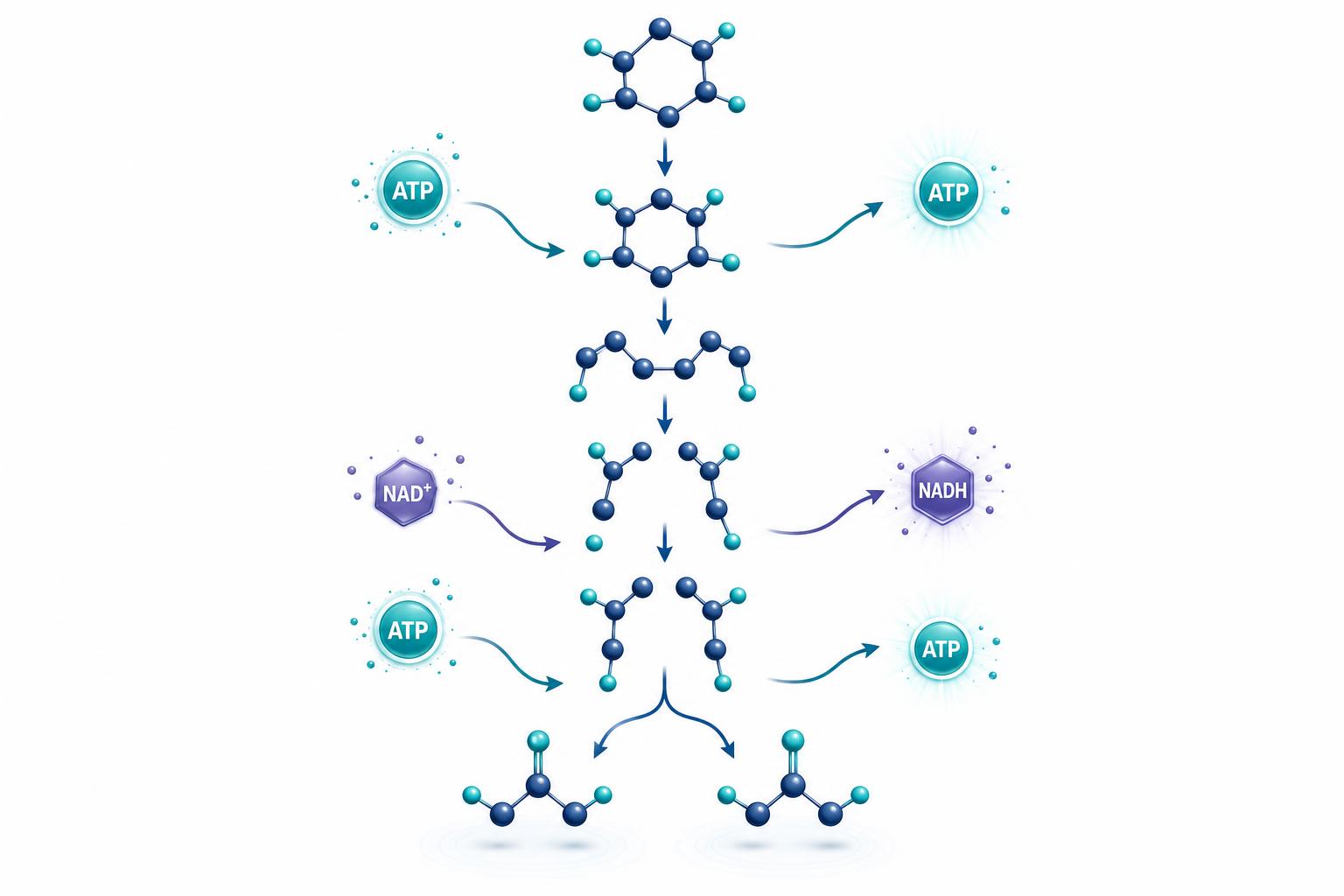
When you eat carbohydrates, they break down into glucose — a simple sugar molecule. Glycolysis is the first step your cells use to squeeze quick energy out of that glucose.
Think of it like making change: you put in a $5 bill (glucose), the cell spends a little processing energy, and you get back a handful of $1 coins (ATP) plus vouchers (NADH) that can be redeemed for even more energy in the next step.
For every glucose molecule, glycolysis produces two pyruvate molecules, a net gain of 2 ATP, and 2 NADH. Those NADH vouchers are the key to the rest of the energy-production line.
What NAD+ actually does
NAD+ is a coenzyme — essentially a rechargeable shuttle — that picks up electrons stripped from glucose during glycolysis and the Krebs cycle. Once it carries those electrons, it becomes NADH.
NADH then feeds into the mitochondria, the cell's power plants, where those electrons drive the production of most of the ATP your body actually spends.
Without enough NAD+, the assembly line slows down. The glucose is still there, but the cell struggles to convert it efficiently into usable energy.
Why NAD+ levels decline with age
NAD+ levels naturally fall as we get older — by roughly 50% between our 20s and 50s. That drop has been linked to slower metabolism, reduced DNA repair, increased inflammation, and less efficient cellular maintenance.
Boosting NAD+ has become a focus in longevity and performance medicine because it supports the machinery that keeps energy production, recovery, and cellular repair running smoothly.
The simple analogy
If glycolysis is making change from a sugar cube, NAD+ is the wallet that carries that change to the bank so you can actually spend it.
More NAD+ means better energy handling, better recovery, and better cellular maintenance — which is why NAD+ protocols are commonly discussed alongside longevity and metabolic-health goals.
How providers think about NAD+ protocols
NAD+ is available in several forms, including IV infusion, subcutaneous injection, nasal spray, and oral precursors such as NMN and NR. The best delivery route depends on your goals, tolerance, and medical history.
A licensed provider will review your health history, current medications, and objectives before recommending a protocol. NAD+ is not appropriate for everyone, especially during pregnancy or with certain medical conditions.
Compounded medications are not FDA-approved and are prepared by licensed US pharmacies for an individual patient with a valid prescription. Individual results vary. Nothing here is medical advice.
Ready to talk to a provider?
Complete a short intake and a licensed clinician will tell you whether a protocol fits your history and goals.
Keep reading
Peptides
BPC-157: What the research actually says
Weight Management
GLP-1 vs. dual and triple agonists: what's the difference?
Getting Started
How telehealth prescribing works at EpixNXT
Getting Started
Why telehealth? The case for online peptide care
Peptides
KLOW blend (BPC-157 / TB-500 / KPV / GHK-Cu), in plain English
Peptides
Tesamorelin: your body's own growth-hormone signal, explained
Peptides
Why stack peptides? How combinations unlock benefits
Peptides
Kisspeptin in plain English: the master switch of reproductive signaling
Peptides
Selank: from Russia with calm